Showing posts with label writing exercise. Show all posts

February 17, 2009

Verb Challenge

Our second challenge this month, to go with the SURE Challenge (see previous post), is the Verbs Challenge.

Write something following these verb rules:

  • No "to be" verbs
  • No unhelpful helping verbs
  • No adverbs
  • No buried verbs

Actually, it's probably easier to write something just trying to follow those rules but then revise the piece.


Remind me, what are the "To Be" verbs we can't use?
Let's conjugate!

infinitive: be
past tense: was, were
present participle : being
past participle: been
present tense: am, are, is (I am, they are, she is)

What are Helping Verbs again?
Here's a good explanation of helping verbs. Have, Be, Do, Can .... these are helping verbs. They have no meaning of their own and are used only to help the main verb in the sentence. Remember, you can use some helping verbs but only ones that are actually helpful. Don't just throw them in there for the fun of it.

Just for the heck of it, What's a adverb?
Adverbs modify verbs: Rachel spoke quickly. Quickly is the adverb telling us how Rachel spoke-- for this exercise we want to say Rachel prattled, or Rachel blurted. Find verbs that don't need help to convey your meaning.
Adverbs can also modify adjectives: It's a strangely orangish bird. Strangely tells us that this bird wasn't just orange, the orange was a strange orange.

Okay, but what's a Buried Verb?
I have my suspicions. Suspicions is a verb that has been buried in a noun. Instead let's say: I suspect.
Buried verbs end in -ment, -tion, -sion, -ful, or -ance.
Don't have investments, invest.
Don't make commitments, commit.
Don't be joyful, rejoice.

After all, "I hope you enjoy this challenge" is much clearer and easier to read than " I am really hopeful that you will have enjoyment when working on this challenge."

December 16, 2008

Literary Symbolism Challenge (continued)

Okay, are you ready for the next part of the challenge?
Have you chosen a color (see previous post) and a number between 1 and 12?
Great.
Here are the numbered lists -- remember in whatever you write you are to use at least three of the symbols that correspond to the number you chose (the color being one of the symbols).

Animals:
1) Cat: familiars(witchcraft), magic, cunning, forethought
2) Dog: loyalty, faithfulness (snarling dogs: ingratitude)
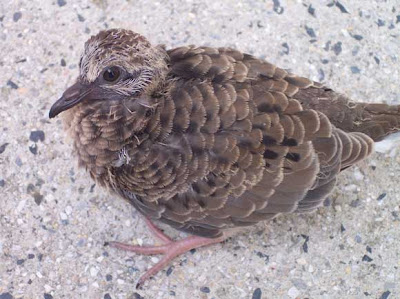
3) Dove: peace, purity, simplicity
4) Fox: slyness, cunning, cleverness
5) Lamb: Spring and renewal, innocence, sacrificial element
6) Lion: the sun, power, pride
7) Mouse: meekness, timidity
8) Owl: wisdom, logic, messengers of death
9) Peacock: pride, vanity
10) Raven: death, destruction, prophecy
11) Salmon: instinct, ancient traditions, perseverance
12) Snake/serpent: temptation, evil

Compass Points and Seasons:
1) North: coldness, alienation, hostility, death
2) South: warmth, comfort, relaxed attitude
3) East: renewal, youth, celebration, song
4) Far East = exotic mystery
5) West: evening, age, decline, ending
6) American West = lawlessness, unconquered or unexplored territory
7) spring: birth, newness, beginning
8) summer: maturity, knowledge
9) autumn: decline, age
10) winter: death, sleep, stagnation
11) Easter: rebirth, hope, salvation, miracles
12) Christmas/Advent: expectation, wonder, miracles, birth

Jewelry and Climate:
1) diamonds: romantic love, hardness
2) gold: wealth, perfection
3) pearls: associated with water as in life or as in tears, also knowledge, or great worth (not wealth)
4) rubies: good fortune
5) sapphires: contemplation, purity
6) silver: object of desires
7) snow: covering, obscuring, blinding
8) fog/mist: isolation, muddled thinking, indefinite (as in waiting, or prelude to a decision/revelation)
9) rain: sadness, despair, or bringing life
10) wind and storms: violent human emotions
11) lightening: power, strength, spark of life or death, suddenness
12) thunder: the voice of Deity

Nature:
1) Darkness: evil, ignorance, danger
2) Dawn: beginnings, promises, freshness, time of blessings
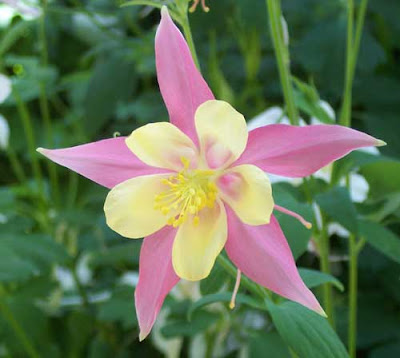
3) Flowers: beauty, youth, gentle strength
4) Forests: secrets, hidden things, often evil or fearful places
5) Light: truth, safety, knowledge, warmth
6) Moon: change, women, passage of time
7) Mountains: the meeting of heaven and earth, pride
8) Pine Tree: immortality (evergreen)
9) Rainbows: heralds of rebirth or change, promises
10) Sun: heat and light, source of life, royal power (usually masculine)
11) Water: regeneration, origin of life
12) Weeds: outcasts, disorder, wildness (not of society)


So if your number is #2 then you could write about this faithful little Southern dog -- warm and comforting to his mistress Dawn, as she begins to seek her blessings and search for the great golden wealth she has been promised but encounters difficulties from the menacing man in the solid black suit.


Whereas the #11 might opt to go with a sci-fi story about blue waters coming to life after being struck by lightening... Or something more poetic, like the using the "ancient traditions" symbolism of salmon, plus their seasonal upstream antics, to connect the life/rebirth symbolism of Easter and Water against a background of blues.

The possibilities are endless.

If you're not a blog author, please feel free to participate and publish your writing to the comments section of this post.

December 15, 2008

Color Theory and Symbolism

For December we will be looking at Literary Symbolism.
Sometimes a tree is just a tree, and sometimes it's an oak tree that represents strength and wisdom, or a sycamore representing vanity, or the evergreen pine whose branches clue us to a theme of immortality. You can give your writing depth by knowing and using symbolism in your novels or poems (it even works in non-fiction).

The easiest way to start is with color symbolism. Here's a simplistic example:
The sea flashes grey under the stormy skies as the fishermen cast their nets upon it.
The color grey represents both life and death -- in this example the sea might bring life in the form of food (fish) but it might also bring death or at least danger to the fishermen. (And storms usually represent violent human emotions by the way.)

So here's the list of Colors and what they usually represent:
1) white = life, good guy, purity
2) black = death, enemies, bad guy
3) grey = life and death (ie grey sea =fish/food+ danger/death)
4) red = pain, violence, blood (scarlet – emotional or physical pain)
5) gold = wealth
6) brown = earth/ farmer brown
7) green = birth or rebirth (in some cultures green = death /mold/decomposition)
8) pink = femininity (note: red and white)
9) purple = royalty
10) yellow = defined in context, often light/revelation/enlightenment , also blindness
11) blue = reflected off water is life symbol, contextual meaning (also calm, or Christianity)
12) orange = lust, fire, consuming

For our Monthly Challenge we will use one of the colors (in its prescribed meaning) along with at least two other aspects of symbolism. Any format as long as it's readable -- no sculptures, okay?

So pick a number between One and Twelve (can be the same number as the color you want to use) and watch this spot.
Tomorrow I'll post some other examples of literary symbolism.
In numbered lists.
Whatever number you picked, that'll be the symbols you'll work with for this exercise.
Oh, I know you'd rather choose for yourself, but remember this will stretch you, and stretching is good for your writing muscles.

October 20, 2008

October Writing Exercise

Your character is walking on a moonlight beach watching the waves come in.

Write the scene without using the following words :

  • water
  • waves
  • sand
  • beach
  • night
  • ocean

October 14, 2008

Have You Heard About NaNoWriMo?

November is National Novel Writing Month. Did you know this already? I just heard about it, a friend sent me a link. It sounds like fun. Check it out; give it a try. Why not?